
Recognizing the signs of undiagnosed diabetes at school: Guidance for school staff
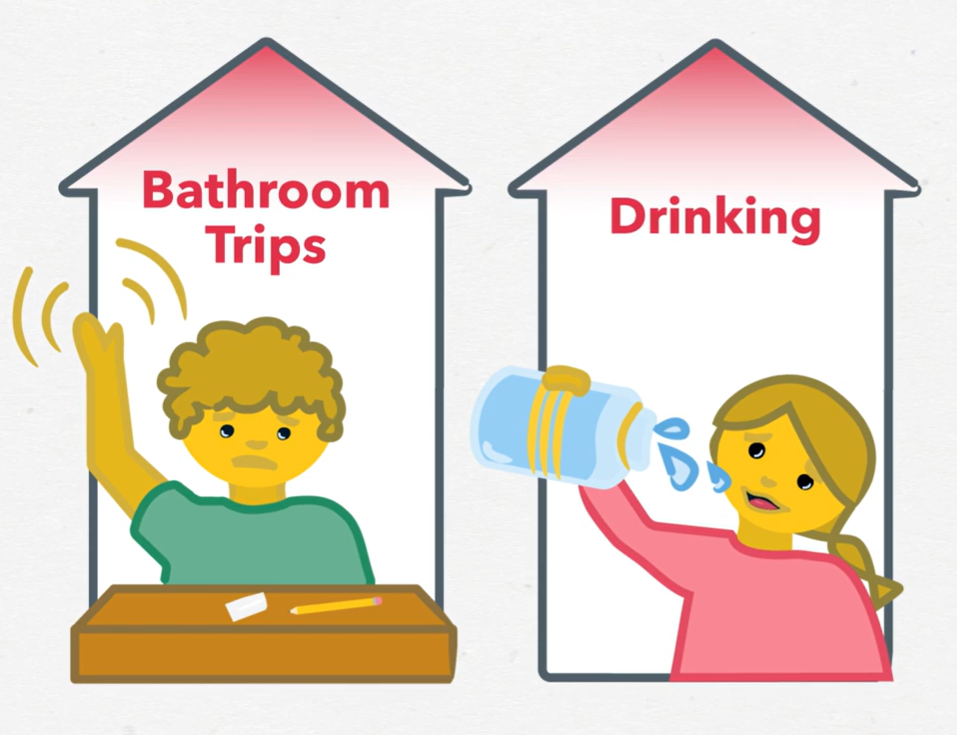
Increased frequency of bathroom trips (peeing) and/or drinking (excessive thirst) in a child could be signs of diabetes.
If you notice these signs in a student, talk to your principal immediately! You can jointly decide how to communicate to their parents/caregivers the need to seek immediate medical attention for their child. This can help keep children safe by preventing them from getting seriously ill.
Principals should have the following information sheets and poster available to guide communication with the parents/caregivers.
Guidance for principals
How to use these materials in your school:
- Show this 90-second video to staff at the start of the school year.
https://www.youtube.com/embed/vT2_q2lveJk
- Display or share this poster with staff in your school.
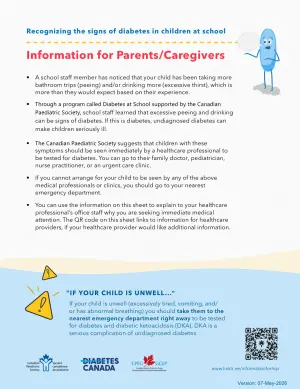
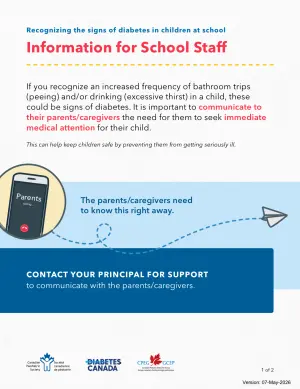
- If a staff member recognizes signs of diabetes in a student, they are instructed to talk to their principal immediately to jointly decide how to communicate their observations to the parents/caregivers. Principals should have the following information sheets available to guide communication with parents/caregivers:
- Poster for school staff
- Information for school staff
- Information for parents/caregivers
- Parents/caregivers can give this infographic to their child's health care provider.
Resource development
The development of these materials was led by Dr. Rayzel Shulman, MD, PhD, FRCPC, Division of Endocrinology, The Hospital for Sick Children and Dr. Celia Laur, PHD, MSc, FHEA, Women’s College Hospital, Institute for Health Systems Solutions and Virtual Care – Office of Spread and Scale and in collaboration with the Canadian Pediatric Endocrine Group (CPEG) Diabetic Ketoacidosis (DKA) prevention working group.
The material implementation was led by Mikayla Sonnenberg, CRPC, Division of Endocrinology, The Hospital for Sick Children.
These materials were created with knowledge users, educators, caregivers of children living with diabetes, people with lived experience, diabetes healthcare providers, researchers, and organizations.
Funding
The development of these resources was supported by Diabetes Canada's End Diabetes Award (Dec 2023-2026)
Source : Diabetes@school. diabetesatschool.ca © Canadian Paediatric Society
Last updated: